Почему бизнесу нужна маркетинговая стратегия полного цикла
Полноворонная маркетинговая стратегия связывает осведомлённость, рассмотрение, конверсию и удержание, чтобы сократить неэффективные расходы и обеспечить устойчивый рост.

Большинство компаний начинают разговор о росте с неправильного вопроса. Они спрашивают, как получить больше трафика, больше лидов или больше продаж, тогда как настоящий вопрос звучит так: что происходит с покупателями между моментом первого знакомства с вашим брендом и моментом, когда они решают заплатить?
Разрозненная полноворонковая маркетинговая стратегия теряет выручку на каждом этапе, который она игнорирует. Компании вливают бюджеты в генерацию спроса, при этом оставляя потенциальных клиентов на середине воронки без направления. Другие активно инвестируют в инфраструктуру продаж, но не имеют процесса для выстраивания доверия до того, как покупатель вообще свяжется с продавцом. Результат — нестабильные показатели, неэффективные расходы и клиентский путь, полный пробелов, которые конкуренты незаметно заполняют.
Для любой B2B маркетинговой стратегии , нацеленной на предсказуемый и масштабируемый рост, полноворонковый подход — не вопрос предпочтения, а структурная необходимость.
Как работает маркетинговая воронка и почему важен каждый этап
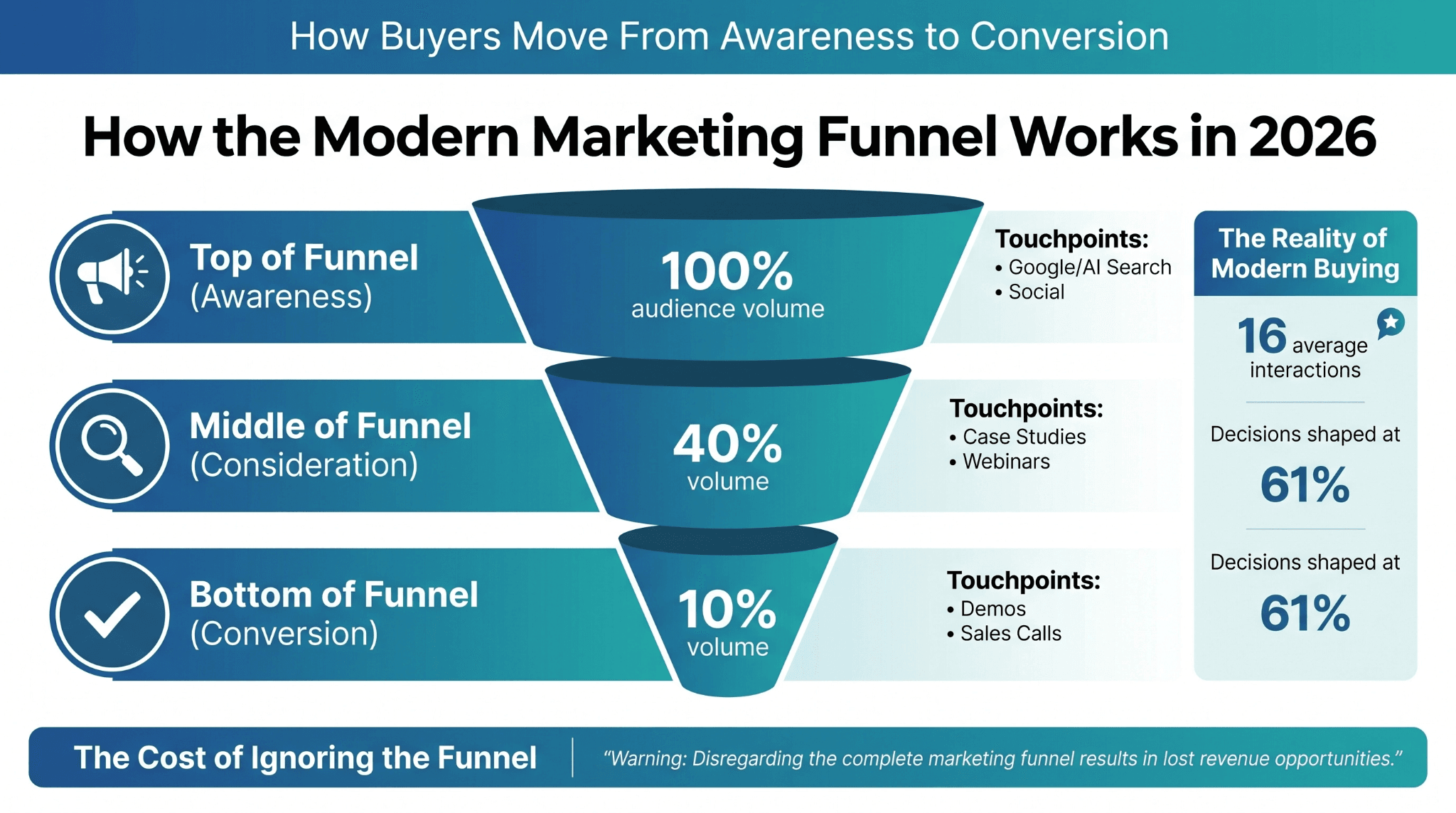
Маркетинговая воронка — это структурированная модель пути клиента. Картирование клиентского пути, то есть процесс документирования каждой точки контакта, с которой сталкивается покупатель от первого знакомства до покупки, — это основа, на которой строится полноворонковая система. Она показывает, как человек проходит путь от первого контакта с вашим брендом до превращения в платящего клиента и, в идеале, повторного покупателя. Термин «воронка» отражает простую истину: многие входят на этапе осведомлённости, и лишь меньшая часть доходит до точки конверсии внизу.
Эта концепция восходит к модели AIDA Элиаса Сент-Элмо Льюиса, но её логика актуальна в 2026 году как никогда. Каждая современная маркетинговая модель — Flywheel от HubSpot, Consumer Decision Journey от McKinsey — построена на этой же основе.
Три ключевых этапа воронки
Каждый этап воронки выполняет отдельную функцию. Сведение их в одну кампанию «получить больше клиентов» — именно с этого большинство компаний начинает терять деньги.
|
Этап воронки |
Образ мышления покупателя |
Ваша основная задача |
|
Верх воронки (осведомлённость) |
«Кажется, у меня есть проблема.» |
Видимость и релевантность |
|
Середина воронки (рассмотрение) |
«Я сравниваю варианты.» |
Доверие и дифференциация |
|
Низ воронки (конверсия) |
«Я готов принять решение.» |
Устранить трение, усилить уверенность |
Идея о том, что потенциальный клиент видит рекламу и конвертируется за одну сессию, в B2B-среде почти полностью является вымыслом. Согласно отчёту 6sense Buyer Experience Report 2025, основанному на исследовании более 4 000 покупателей по всему миру, в среднем на одного человека приходится 16 взаимодействий с победившим поставщиком, а первый значимый контакт теперь происходит на отметке 61% пути против 69% годом ранее.
К тому моменту, когда потенциальный клиент заполняет вашу контактную форму, у него уже сложилось устойчивое мнение о вашем бренде. Бизнес без полноворонковой маркетинговой стратегии теряет влияние на большей части пути, которого он даже не видит.
Риски зависимости от одного маркетингового канала или этапа воронки
Пробелы в воронке — это не просто упущенная возможность; они напрямую разрушают эффективность маркетинга. Конкретный ущерб зависит от того, на каком этапе бизнес делает чрезмерную ставку и какие этапы полностью игнорирует.
Когда компании сосредотачиваются только на трафике, они по сути наполняют протекающее ведро. Согласно исследованию Ruler Analytics на основе более 100 млн точек данных, средняя конверсия B2B из посетителя в лид составляет 2,9%, а это значит, что подавляющее большинство посетителей сайта никогда не конвертируется. Без контента для этапа рассмотрения, инфраструктуры ретаргетинга и сигналов доверия оставшиеся 97% уходят и больше не возвращаются.
Когда компании сосредотачиваются только на продажах, последствия столь же дорогостоящи. Опрос Gartner от марта 2026 года среди 646 B2B-покупателей показал, что 67% теперь предпочитают опыт без участия представителя по продажам по сравнению с 61% годом ранее. Компании, пропускающие этапы осведомлённости и рассмотрения, теряют возможность формировать выводы покупателя до того, как это сделает конкурент.
Негативные последствия быстро накапливаются, когда этапы воронки работают изолированно:
-
Рекламные расходы приносят менее качественные лиды, потому что потенциальные клиенты не были предварительно подготовлены
-
Команды продаж тратят больше времени на обучение холодных контактов, увеличивая длительность цикла
-
Стоимость привлечения клиента растёт без соответствующего улучшения показателей закрытия сделок
-
Удержание ухудшается, потому что покупатели, пришедшие без подлинного доверия, быстрее уходят
Неполная digital marketing strategy не просто снижает результаты; она системно неправильно распределяет ресурсы между всеми командами, которых касается.
Как полноворонковая маркетинговая стратегия создаёт лучший клиентский опыт
Базовая логика полноворонкового подхода состоит в том, что разным покупателям нужны разные вещи в зависимости от того, на каком этапе пути они находятся. Потенциальному клиенту, который только что осознал, что у него есть операционная проблема, не нужна страница с ценами. Потенциальному клиенту, сравнивающему поставщиков, не нужен дополнительный образовательный контент; ему нужны кейс, прямое сравнение или сторонний обзор.
Предоставление неправильного контента в неподходящее время всегда приводит к одному и тому же результату: потенциальный клиент теряет интерес и уходит.
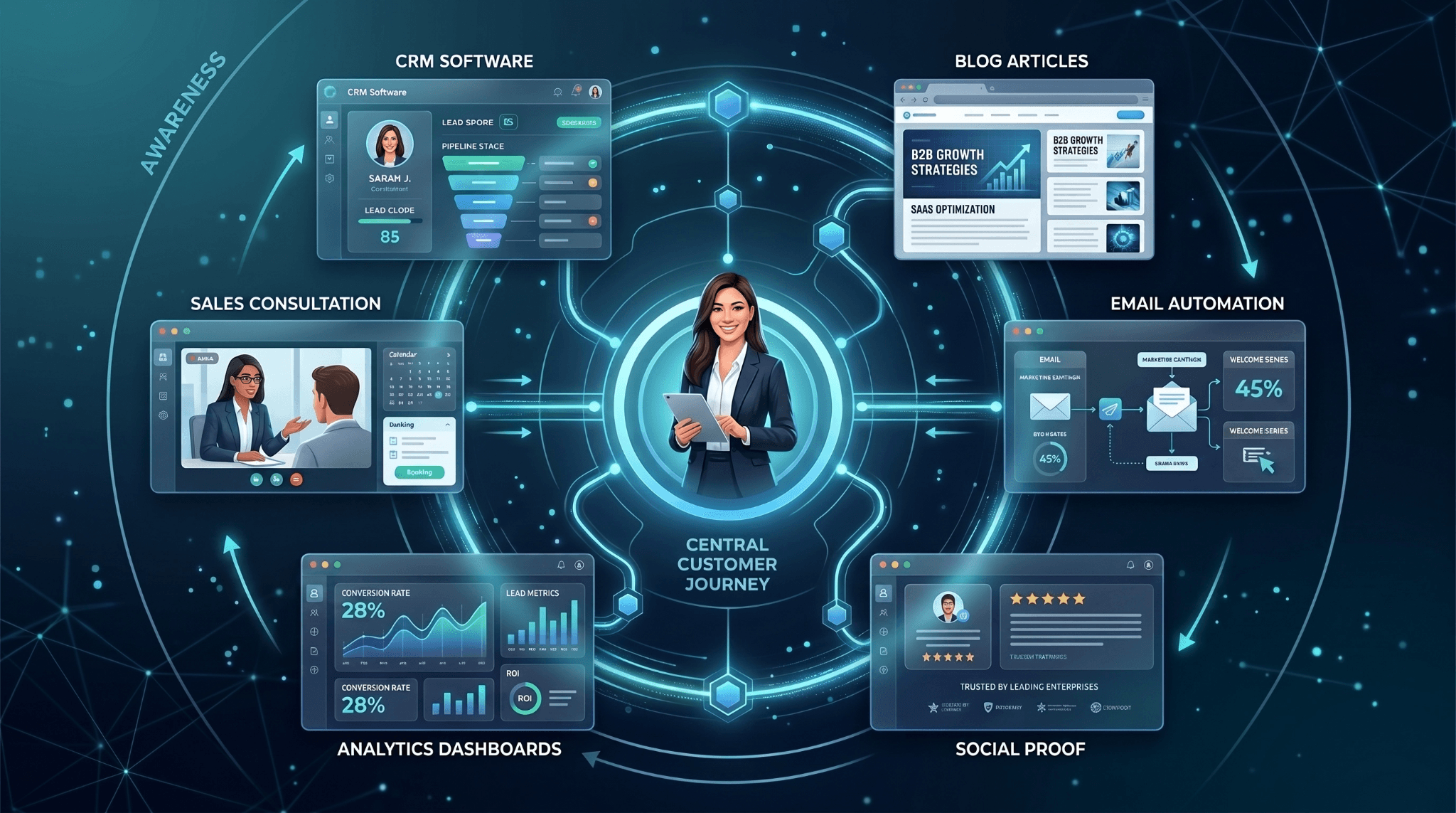
Доверие накапливается через точки контакта: содержательная статья здесь, подробный кейс там, заметный сигнал социального доказательства и сообщения, которые никогда не противоречат сами себе. Именно здесь важна архитектура систем. Когда ваша CRM связана с системой управления контентом, email-платформой и инструментами рекламного ретаргетинга, вы можете отслеживать, с чем потенциальный клиент уже взаимодействовал, и предлагать следующий логичный шаг. Без такой интеграции каждое последующее касание — это догадка.
В нижней части воронки основное состояние покупателя — управление рисками. Стратегические сообщения здесь снижают воспринимаемый риск: чёткие процессы, видимые шаги онбординга и доступные точки контакта помогают уверенному потенциальному клиенту перейти к решительному действию. Компании, которые проектируют этот слой конверсии, а не полагаются на стандартную контактную форму, получают существенно более высокие показатели закрытия при том же объёме лидов.
Ключевые компоненты успешной полноворонковой стратегии digital marketing
A complete digital marketing strategy — это не набор отдельных кампаний. Это интегрированная система, в которой каждый канал выполняет определённую функцию в рамках более широкой архитектуры воронки.
Таблица ниже сопоставляет каждый этап воронки с его тактиками, типами контента и показателями эффективности, давая руководителям по операциям и маркетингу рабочую структуру, а не расплывчатый чек-лист.
|
Этап воронки |
Основные тактики |
Типы контента |
Ключевые метрики |
|
Осведомлённость |
SEO, контент-маркетинг, социальные сети, бренд-кампании |
Посты в блоге, образовательные статьи, короткие видео |
Органический трафик, показы, видимость в AI-поиске |
|
Рассмотрение |
Email-маркетинг, кейсы, сравнительный контент |
Кейсы, white papers, вебинары, email-цепочки |
Время на странице, open rate email-рассылок, повторные визиты |
|
Конверсия |
Лендинги, ретаргетинг, формы лидогенерации, CTA |
Страницы предложений, демо, контент о ценах, отзывы |
Коэффициент конверсии, стоимость лида, объём MQL |
|
Удержание |
Развитие клиентов, апсейлы, программы лояльности |
Онбординг-контент, регулярные касания, обновления продукта |
Уровень оттока, пожизненная ценность клиента, NPS |
Несколько моментов, которые стоит особенно подчеркнуть по каждому этапу:
Осведомленность
В 2026 году видимость выходит за рамки традиционных позиций в Google. AI search, Google AI Mode, ChatGPT Search и Gemini теперь влияют на то, как покупатели находят решения, еще до того как они вообще заходят на сайт. Контент для верхней части воронки должен быть создан для извлечения AI-системами:
-
Четкие, самостоятельные определения ключевых понятий
-
Объяснения, насыщенные сущностями, которые AI systems могут извлекать и цитировать
-
Авторитетные источники, которые формируют тематическую достоверность
Кампании по повышению узнаваемости бренда и многоканальное маркетинговое распространение обеспечивают накопительный рост органического трафика со временем, а не кратковременные всплески от отдельных кампаний.
Рассмотрение
Именно на этом этапе большинство B2B-сделок выигрывается или проигрывается еще до подключения отдела продаж. Здесь важнее всего две вещи:
-
Кейсы с конкретными, проверяемыми результатами, а не общими заявлениями о возможностях
-
Email-цепочки строятся на поведенческих триггерах, а не на фиксированных графиках, чтобы нужный ресурс попадал к нужному потенциальному клиенту в нужный момент
Конверсия
Этот этап зависит от конкретики. Несколько принципов, которые стабильно улучшают результаты:
-
"Получить аудит системы" работает лучше, чем "Свяжитесь с нами", потому что объясняет потенциальному клиенту, что именно он получит
-
Лендинги, созданные для одного сегмента аудитории, всегда работают лучше универсальных страниц
-
Трение на этапе конверсии, длинные формы, неясные следующие шаги и несоответствующие сообщения — вот где теряются готовые к покупке клиенты
Удержание
Это этап, в который большинство компаний инвестирует недостаточно. Для SaaS, логистических и сервисных компаний значимое улучшение удержания клиентов дает больший эффект на выручку, чем сопоставимое улучшение привлечения новых. Вовлечение после продажи должно быть структурированным, а не пассивным.
Как full-funnel маркетинговая стратегия повышает окупаемость инвестиций
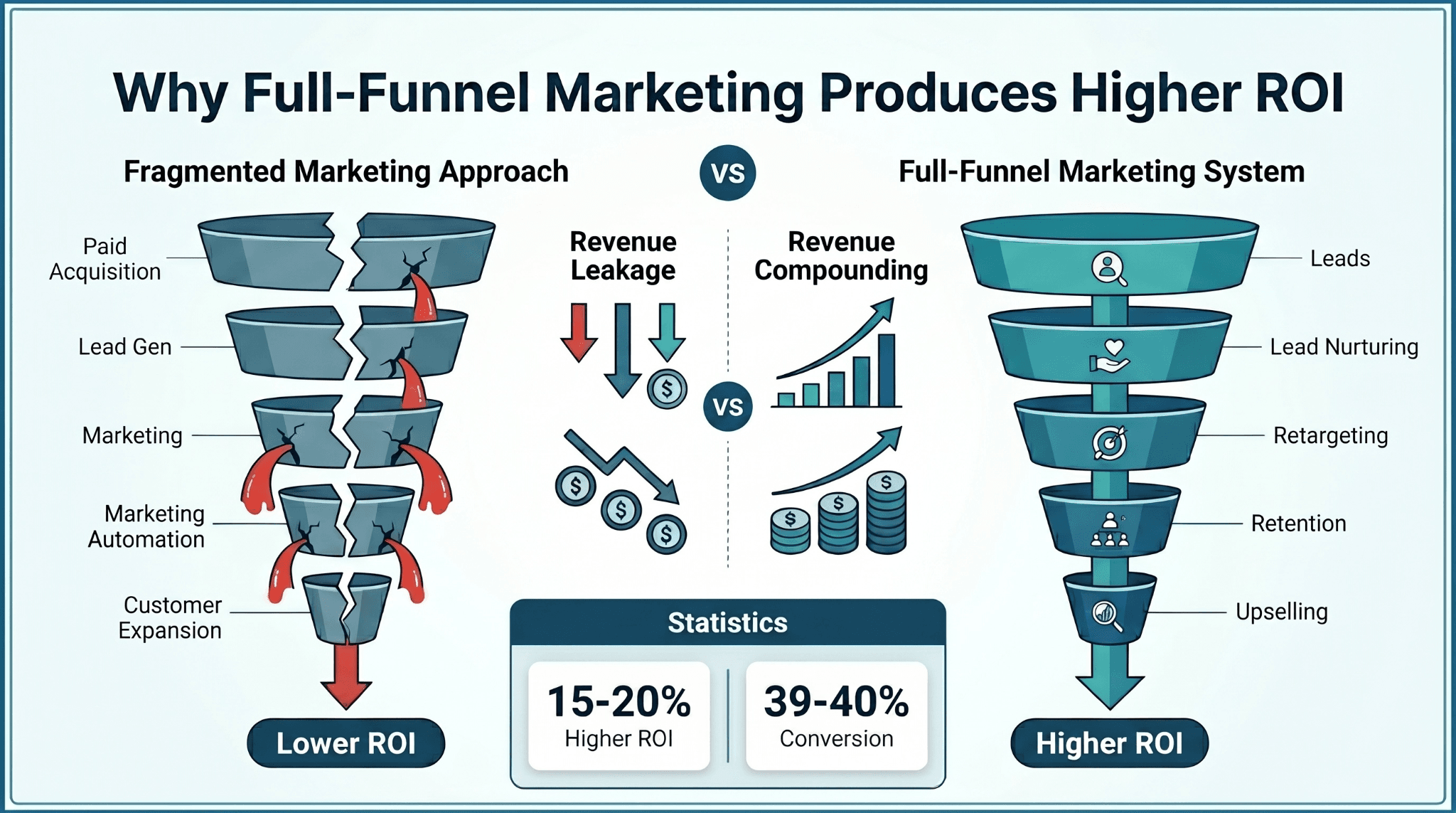
Самый распространенный источник неэффективных маркетинговых расходов — чрезмерные вложения в один этап воронки без поддерживающей инфраструктуры на остальных. К этому стабильно приводят три сценария:
-
Высокообъемное платное привлечение без системы nurturing конвертирует лишь малую часть от возможного
-
Инвестиции в контент без ретаргетинга не дают накопительного эффекта на всем пути покупателя
-
Пропуск оптимизации коэффициента конверсии означает, что вы платите за привлечение лидов, а воронка не может закрыться
Согласно McKinsey, full-funnel маркетинговая стратегия может повысить ROI маркетинга на 15%–20% не за счет увеличения расходов, а за счет перераспределения медиабюджета в зоны с более высокой отдачей и сокращения потерь выручки между этапами.
Потенциальные клиенты, проходящие через правильно выстроенную последовательность воронки, приходят более информированными и более уверенными. Последующий эффект измерим:
-
Более короткие циклы продаж, потому что на этапе продаж требуется меньше обучения
-
Более высокие показатели конверсии из MQL в SQL, достигающие 39%–40% у команд, использующих поведенческий lead scoring
-
Более низкий отток клиентов, когда вовлечение после продажи строится вокруг поведенческих триггеров, сигналов использования, окон продления и продуктовых этапов, а не остается пассивным
Маркетинг, основанный на системах, работает непрерывно. Кампании заканчиваются; системы — нет. Компании, которые развивают всегда включенную инфраструктуру удержания параллельно с программами платного привлечения, растут более предсказуемо и получают выручку от расширения, которой невозможно добиться только холодным привлечением.
Признаки того, что ваш бизнес может упускать важные этапы воронки
У большинства компаний есть как минимум один значительный пробел в воронке. Симптомы достаточно типичны, чтобы служить надежными диагностическими сигналами.
Если что-либо из следующего описывает вашу текущую ситуацию, проблема носит структурный характер, а не связана с креативом или бюджетом:
-
Вы привлекаете хороший трафик, но показатели конверсии остаются низкими, что указывает на пробел в середине воронки, связанный с формированием доверия и контентом для этапа рассмотрения
-
Лиды попадают в воронку, но редко доходят до закрытия сделки, что указывает на сбой nurturing между передачей от маркетинга и готовностью к продажам
-
Клиенты покупают один раз, но редко возвращаются, что сигнализирует о нарушенном уровне удержания без архитектуры опыта после продажи. Отток клиентов на этом этапе почти всегда можно предотвратить при наличии правильной инфраструктуры revenue operations
-
Маркетинговые результаты непредсказуемо колеблются от месяца к месяцу — классический симптом зависимости от одного канала или одного этапа
Для каждого из этих сценариев существует системное решение. Full-funnel маркетинговая стратегия распределяет эффективность по нескольким взаимозависимым этапам, делая результаты более стабильными и более чувствительными к целенаправленной оптимизации.

Практические шаги по созданию более сильной full-funnel маркетинговой системы
Построение full-funnel системы не требует полной перестройки всего и сразу. Самый эффективный подход — сначала диагностика: определить, где находится самая большая утечка, устранить ее, а затем переходить к следующей.
Вот последовательность, которая стабильно дает результаты:
-
Составьте карту пути клиента, зафиксировав, как покупатели сейчас находят вас, оценивают вас и совершают покупку. Определите каждый используемый ими канал: поиск, социальные сети, email, рекомендации, точки контакта многоканального маркетинга, а также моменты, в которых они прекращают взаимодействие. Пробелы станут очевидны очень быстро.
-
Создавайте контент для каждого этапа, назначая конкретные форматы для каждой зоны воронки: образовательные статьи для осведомленности, кейсы для этапа рассмотрения, страницы оффера для конверсии, ресурсы по онбордингу для удержания.
-
Согласуйте маркетинг и продажи вокруг общей CRM, согласованных критериев lead scoring и единого позиционирования. Согласованность маркетинга и продаж — это не культурная инициатива, а системное требование. Передача между командами — это точка, в которой доверие к воронке либо сохраняется, либо рушится, и где инвестиции в lead generation либо защищаются, либо теряются впустую.
-
Измеряйте больше, чем просто трафик, отслеживая глубину вовлечения, коэффициенты конверсии из MQL в SQL, длину цикла продаж и удержание клиентов. Эти метрики показывают, где теряется выручка, а не только где читают контент.
Частые вопросы бизнеса о full-funnel маркетинге
Понимать модель в теории — это одно. Применять ее в реальном бизнесе с реальными бюджетными ограничениями — совсем другое. Это вопросы, которые возникают чаще всего, когда организации начинают переход от маркетинга, основанного на кампаниях, к маркетингу, основанному на системах.
В чем разница между маркетинговой воронкой и воронкой продаж?
Маркетинговая воронка охватывает весь путь покупателя — от осведомленности до удержания после покупки. Воронка продаж относится к более узкому участку, которым управляет отдел продаж: от квалификации лида до закрытой сделки. В full-funnel стратегии эти две системы работают как единая интегрированная система.
Сколько времени нужно, чтобы увидеть результаты?
Тактики нижней части воронки, такие как платные кампании на конверсию, могут приносить результаты в течение нескольких недель. SEO и контент-маркетингу обычно требуется от трех до шести месяцев, чтобы набрать измеримый импульс. Со временем система становится эффективнее, поскольку каждый этап усиливает остальные.
Нужна ли малому бизнесу full-funnel стратегия?
Да, хотя масштаб отличается. Небольшому бизнесу не нужен martech stack уровня enterprise; ему нужен контент, который формирует осведомленность, сигналы доверия, поддерживающие этап рассмотрения, понятный путь к конверсии и базовый процесс удержания. Этот принцип применим независимо от размера компании.
Как понять, в какой этап воронки инвестировать в первую очередь?
Начните с того места, где самая большая утечка. Нет трафика — инвестируйте в узнаваемость. Есть трафик, но нет лидов — инвестируйте в инфраструктуру этапов рассмотрения и конверсии. Есть лиды, но низкий процент закрытия сделок — инвестируйте в прогрев. Высокий отток — инвестируйте в удержание.
Как AI search влияет на full-funnel marketing в 2026 году?
Согласно исследованию Apollo о B2B-покупателях в 2026 году, 89% B2B-покупателей теперь используют генеративный ИИ как основной инструмент для исследования. Это означает, что контент для верхней части воронки должен быть структурирован для извлечения ИИ, а не только оптимизирован под традиционное ранжирование по ключевым словам. Компании, которые включают видимость в AI search в свою стратегию узнаваемости, получают доступ к исследовательскому каналу, который теперь влияет на большинство решений покупателей на ранних этапах.
Построение устойчивого роста с помощью комплексной стратегии цифрового маркетинга
Компании, которые стабильно растут, — это не те, кто запускает лучшие отдельные кампании. Это те, кто выстраивает лучшие системы: интегрированные, постоянно работающие и непрерывно оптимизируемые на каждом этапе пути покупателя.
Полная стратегия full-funnel marketing рассматривает узнаваемость, рассмотрение, конверсию и удержание как взаимозависимые функции в рамках единой операционной модели. Слабость на любом этапе ограничивает возможности на всех остальных. В 2026 году, когда путь покупателя становится длиннее и более фрагментированным, разрыв между компаниями с интегрированными маркетинговыми системами и теми, кто запускает изолированные кампании, будет только расти. Компании, которые добьются масштабируемого роста, — это те, кто строит инфраструктуру уже сейчас, а не запускает очередную кампанию.
WellsGroup создает и управляет инфраструктурой full-funnel marketing, необходимой растущим компаниям, — от видимости в AI search на верхнем уровне до CRM-управляемых систем удержания на нижнем. Каждый компонент спроектирован так, чтобы работать вместе с другими, измеряться по реальным результатам и функционировать непрерывно.
Хотите создать маркетинговую систему, которая приносит результаты на каждом этапе воронки? Запишитесь на бесплатную консультацию с WellsGroup, чтобы начать.